
The End-to-End Recruitment Process: A Friendly Guide to Hiring Smarter from Plan to Onboarding
Hiring rarely goes wrong because of one bad interview. More often, it stumbles in the gaps between steps: a vague job brief here, a slow feedback loop there, a new hire left waiting for a laptop on day one. That’s why it helps to think of the end-to-end recruitment process as one connected journey rather than a string of separate tasks.
For HR and talent acquisition teams, an end-to-end approach means owning hiring from the very first workforce planning conversation right through to a new employee settling in. Each stage feeds the next, so small improvements early on make everything downstream smoother.
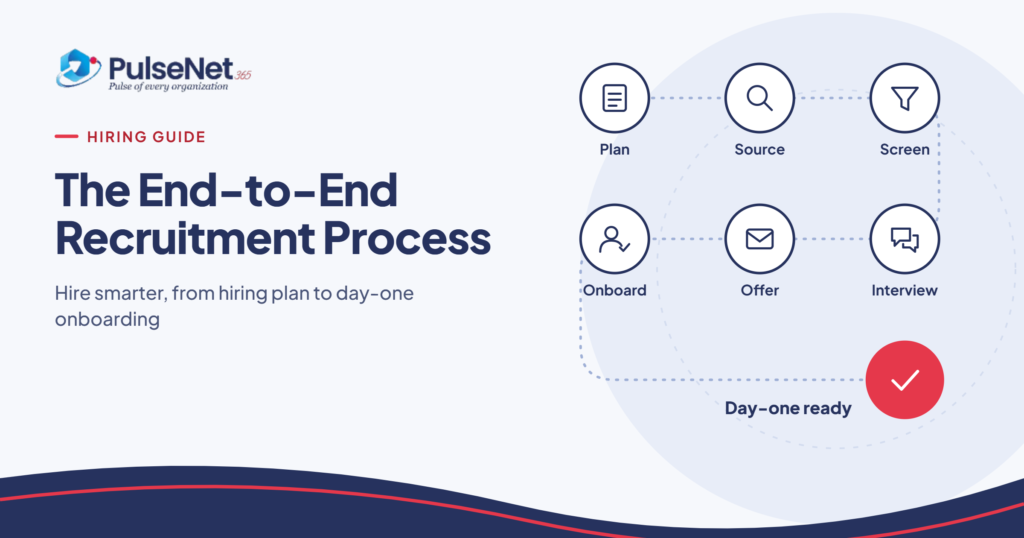
In this guide, we’ll walk through the full recruitment lifecycle: strategic workforce planning, candidate sourcing, screening and selection, making the offer, onboarding, and finally hiring process optimization. Along the way, you’ll find practical ideas you can try with your own team, whatever the size of your hiring plans.
Start with Strategic Workforce Planning
Great hiring starts long before a job ad goes live. Strategic workforce planning means asking a simple question first: what does the business need to achieve, and which people will help it get there? Linking each new role to a real goal, like launching a product or expanding a service, keeps your end-to-end recruitment process focused and easy to justify.
Next, sit down with department leaders to spot skill gaps and agree on headcount. Ask what’s slowing teams down today, which skills will matter next year, and whether a gap is best filled by hiring, upskilling or restructuring.
Once the need is clear, write a role profile that spells out the purpose of the job, key responsibilities, must-have skills and what success looks like. A clear, honest job description attracts the right candidates, makes screening simpler and gives hiring managers shared criteria from day one.
Candidate Sourcing: Finding the Right People
Once you know exactly who you need, it’s time to go find them. Strong candidate sourcing rarely relies on a single channel. Mix job boards with employee referrals, social media, your existing talent pool and outreach to passive candidates who aren’t actively looking but might be open to the right opportunity.
Your employer brand does a lot of quiet work here. Share honest stories about your culture, team and growth opportunities so good candidates actually want to apply, not just scroll past.
Keep Your Pipeline Warm
- Stay in touch: Send occasional updates to strong past applicants and silver-medal candidates.
- Tag and organise: Label profiles by skills and roles so you can find them quickly later.
- Nurture relationships: A quick check-in message beats starting from scratch every time a role opens.
Candidate Screening and Selection
Once applications start rolling in, screening is where you separate “looks interesting” from “genuinely right for the role.” A light, layered approach usually works best. Start with a quick CV review against the must-haves from your role profile, follow up with a short phone screen to check motivation and basics, then use a practical skills assessment for shortlisted candidates.
When it comes to interviews, structure is your friend. Ask every candidate the same core questions, score answers against agreed criteria, and keep notes. This keeps employee recruitment and selection fair, consistent and much easier to defend.
Finally, get hiring managers on the same page early. Agree on what “great” looks like, who gives feedback and by when. A simple scorecard and a firm feedback deadline can stop decisions from stalling, so strong candidates don’t drift away while you deliberate.
Making the Offer and Closing the Deal
You’ve found your person. Now’s the moment to move quickly, because strong candidates rarely stay on the market for long. Call them to share the good news personally, then follow up with a clear written offer that spells out the role, start date and package so there’s no guesswork.
Keep Momentum Through the Final Steps
Negotiations are normal, so go in knowing where you have flexibility and who can sign off on changes. Run reference checks and background paperwork in parallel rather than one after another, and give the candidate a simple checklist of what you need from them. Small delays here are where many hires quietly slip away.
Look After the Runners-Up
Don’t leave other finalists hanging. Let them know promptly and respectfully, offer brief feedback if you can, and ask whether they’d like to stay in your talent pool. A kind “not this time” today can turn into a great hire later.
Onboarding: Where Recruitment Really Pays Off
It’s tempting to celebrate a signed offer and move on, but onboarding is where all that hard work either sticks or slips away. Think of it as the final stage of the talent acquisition process, not a separate HR chore. A great hire who feels lost in week one can quickly become a resignation in month three.
Start Before Day One
Preboarding helps new hires feel welcome while their excitement is still high. A few simple steps go a long way:
- Send a friendly welcome message from their manager and team
- Share practical details like start time, dress code and who to ask for
- Get equipment, accounts and paperwork sorted in advance
Support the First Weeks and Months
Give new starters a clear 30-60-90 day plan, a buddy for everyday questions and regular check-ins with their manager. Ask what’s working and what isn’t, then adjust. Small, consistent support builds confidence and makes people far more likely to stay.
Hiring Process Optimization and Recruitment Management
Once your end-to-end recruitment process is running, the next job is making it better, one small tweak at a time. The trick is knowing where to look.
Track the Metrics That Matter
You don’t need a giant dashboard. A handful of numbers across your recruitment process steps will tell you plenty:
- Time to hire: how long it takes from opening a role to an accepted offer.
- Quality of hire: how new hires perform and whether they stay.
- Source effectiveness: which channels bring in candidates who actually get hired.
- Offer acceptance rate: a quick signal of how competitive your offers and process feel.
Let Tools Do the Heavy Lifting
Recruitment management tools and an applicant tracking system (ATS) can take over scheduling, status updates and reporting, so your team spends less time on admin and more time with people.
Keep Asking for Feedback
Short surveys for candidates and quick check-ins with hiring managers reveal friction points that numbers alone miss. Act on what you hear, and your process keeps improving.
Wrapping Up: Building a Recruitment Lifecycle That Works
When you step back, the end-to-end recruitment process is really one story. Strategic workforce planning tells you who you need, candidate sourcing brings them to your door, screening and selection help you choose well, a clear offer seals the deal, and thoughtful onboarding turns a new hire into a long-term team member. Each stage feeds the next, so a small improvement early on often pays off later.
You don’t need a full overhaul to get started. A few easy first steps:
- Map your current recruitment process steps and note where candidates or decisions tend to stall.
- Agree on shared hiring criteria with your managers before the next role opens.
- Pick one or two metrics, such as time to hire, and start tracking them.
So here’s your friendly nudge: review your workflow this week, choose one area to improve, and build from there. Steady tweaks add up to smarter hiring.